Roofing & Construction Contractor · October 1, 2026
Need it handled? Call (260) 441-6534
Roofing: Roofing & Construction Contractor can help. Call (260) 441-6534 for a free estimate.
In This Article
- TL;DR
- Why Huntertown Roofs Are Prone to Leaks
- What Are the Warning Signs of a Roof Leak Inside Your Home?
- How Do You Spot a Roof Leak From Outside?
- How to Use the Garden Hose Test to Confirm a Leak
- When Should You Call a Roof Professional in Huntertown?
- Finding Reliable Roof Leak Repair in Huntertown
- Recommended Roofing: Roofing & Construction Contractor
- Frequently Asked Questions
- Next Steps: Get Your Roof Inspected
TL;DR
A roof leak in Huntertown often shows up first as yellow-brown water stains on ceilings or walls, musty odors in the attic, or visible granule loss in gutters - but the actual entry point can be 6–10 feet away from where you see the damage. (Energy.gov) (Weather.gov) Learn more about roof replacement cost in Huntertown. Wells County's freeze-thaw cycles and spring storms accelerate roof wear, making early detection critical. Interior inspection (attic first), exterior ground-level checks, and a simple two-person hose test can pinpoint most leaks before they turn a $200 repair into a $900+ structural problem.
Why Huntertown Roofs Are Prone to Leaks
Here in Huntertown, we deal with weather that's tough on roofs. Fort Wayne averages 33 inches of annual snowfall, and our winters bring repeated freeze-thaw cycles from November through March. That constant expansion and contraction - water freezing in gaps, then melting - is exactly what breaks sealant bonds around flashing and widens small cracks into bigger problems.
Most homes built in our area between 1995 and 2015 have architectural asphalt shingles, which typically last 25–35 years in northern climates like ours. If your roof is approaching that age, or if you've noticed granule loss in your gutters after storms, the risk of leaks climbs fast. If you catch a leak early - before it saturates the deck or rots the fascia - you can save thousands in repair costs.
Ice dams are another Huntertown-specific concern. When attic heat melts snow on the upper roof while eaves stay below freezing, meltwater backs up behind the dam and forces its way under shingles. This is one of the most common leak scenarios we see in northeast Indiana homes, and it's entirely preventable with proper attic insulation and ventilation.
Key Takeaway: Huntertown's freeze-thaw cycles and seasonal storms mean roof leaks here can escalate faster than in milder climates - catching them within days, not weeks, makes a real difference in repair cost.
What Are the Warning Signs of a Roof Leak Inside Your Home?
The first place water shows up is usually inside, not outside. Look for yellow-brown water stains on ceilings or walls - they typically appear as rings with a darker edge and lighter center, because minerals deposit at the waterline as moisture evaporates. That's different from condensation stains, which look uniform and don't have rings.
A musty smell in your attic or upper rooms is another red flag. Mold can develop within 24–48 hours of water intrusion, often before you see any visible staining. If you catch that odor early, you're ahead of the problem.
Here's what to check room by room:
Attic Inspection: First Place to Check
Start in the attic with a flashlight on a clear day. Look for water stains on the underside of the roof deck (the plywood or OSB sheathing), wet insulation, or dark streaks along rafters. The actual leak entry point is usually 6–10 feet away from where water drips onto the ceiling below - water travels along framing before it falls. Mark any stains with a pencil, and note their location relative to two fixed points (like a rafter or vent pipe). This triangulation helps a professional pinpoint the source.
Ceiling and Wall Stains: What They Look Like
Check ceilings and upper walls in bedrooms, hallways, and around closets. Fresh stains are darker and may feel damp to the touch. Older stains are lighter and dry. If you're unsure whether a stain is from an active leak or an old one, a $20–$40 moisture meter from any home improvement store can tell you - readings above 1% in drywall indicate active or recent moisture.
Pay special attention to areas around skylights, chimneys, and where the roof meets exterior walls. These are common leak points.
How Do You Spot a Roof Leak From Outside?
You don't need to climb on the roof to spot trouble. A ground-level inspection with binoculars catches most problems safely.
Ground-Level Checks You Can Do Safely
Look for these four exterior signs from the ground or a ladder:
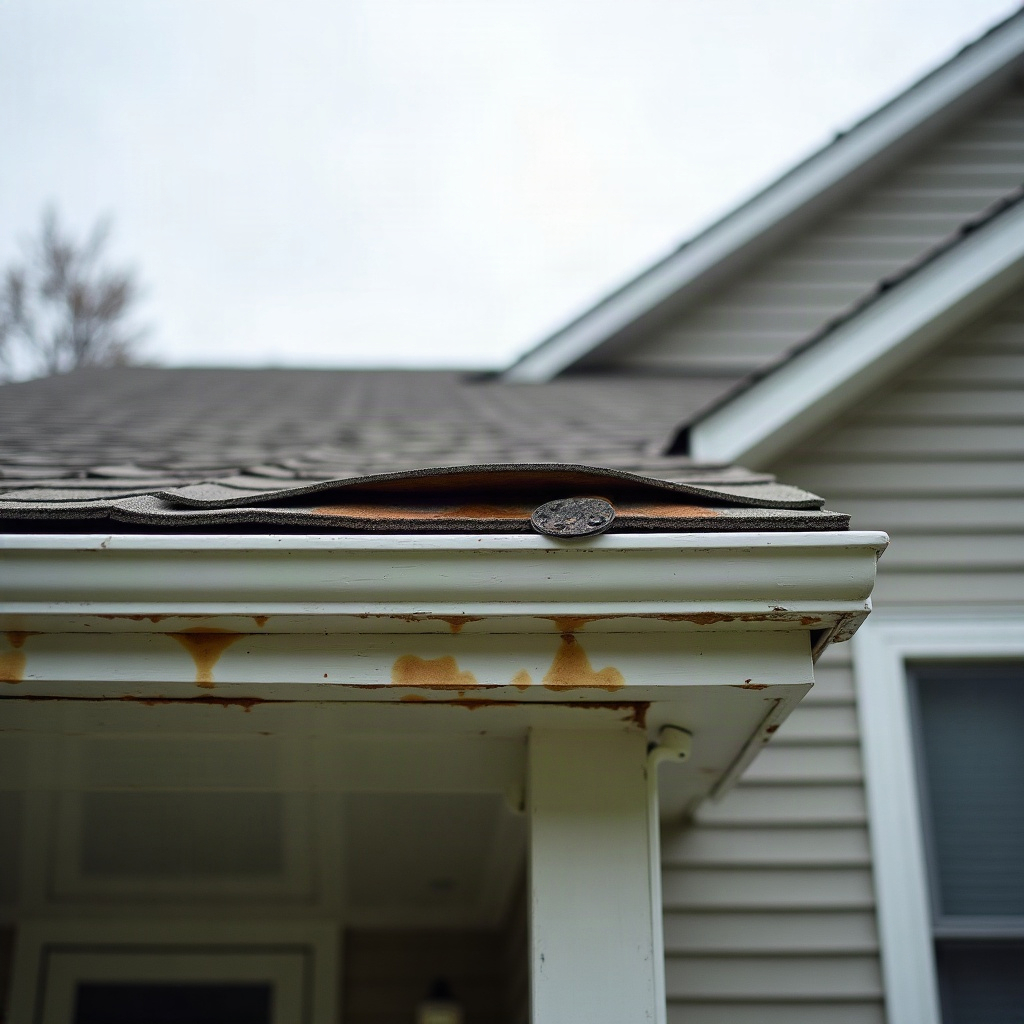
- Shingle damage: Curling, buckling, or missing shingles are obvious red flags. Shingles that are lifting at the edges or have visible cracks won't shed water properly.
- Granule loss: If your downspout deposits a coffee cup's worth of granules after a single storm, your shingles are shedding their protective UV layer - they're within 2–3 years of failure and may already be leaking.
- Sagging roof deck or fascia: A visible dip or bow in the roofline means the sheathing has absorbed water over time. This is structural damage and requires immediate professional assessment.
- Moss or algae growth: Dark streaks or green patches trap moisture and accelerate shingle failure. They're not just cosmetic.
Flashing and Gutter Warning Signs
Flashing - the metal strips around chimneys, vents, valleys, and roof edges - is where most leaks start. Look for:
- Separated or lifted flashing edges
- Cracked or missing sealant around flashing
- Rust stains running down the fascia
- Debris or standing water in gutters (a sign gutters aren't draining properly)
Pipe boots (the rubber collars around plumbing vents) have a 10–15 year lifespan - much shorter than the roof itself. If you can see cracks or collapse in a rubber boot from the ground with binoculars, that's your leak source.
How to Use the Garden Hose Test to Confirm a Leak
If you suspect a leak but can't find it visually, a two-person hose test can pinpoint the location in 30–60 minutes.
Here's the step-by-step process:
- Set up safely. One person goes into the attic with a flashlight and dry towels; the second person stays outside with a garden hose. Do NOT perform this test on a wet, steep, or moss-covered roof, or in freezing conditions.
- Start at the lowest point. The person outside begins spraying water at the lowest part of the suspected leak area, working upslope. Use a gentle spray - you're simulating rain, not a fire hose.
- Isolate each zone. Spray one 3–4 foot section for at least 5 minutes before moving upslope. This gives water time to travel through the roof system.
- Watch from inside. The person in the attic watches for water entry. The moment water appears, mark the spot with a pencil and photograph it. Measure the location from two fixed reference points (a rafter, vent, or chimney).
- Document the entry point. Note the exact location, the time water appeared, and how much water came through. This information is gold for a professional contractor.
- Stop if nothing appears. If you've tested the entire suspected area and no water enters, the leak may be in a different zone, or it may only occur during heavy rain or wind-driven rain. Move to the next suspected area or call a professional.
Limitations: The hose test works best for obvious leak zones. If the leak only happens during heavy downpours or wind-driven rain, a hose test may not reproduce the conditions. Also, if the leak is in a valley or behind a chimney, water may travel a long distance before entering the attic, making the test inconclusive.
When Should You Call a Roof Professional in Huntertown?
Some leaks are straightforward to repair, and some require professional expertise. Here's when to call:
Call a professional immediately if:
- You see active water dripping into your home (not just stains).
- The attic insulation is wet or moldy.
- You notice sagging roof deck or fascia.
- The leak is near a chimney, skylight, or complex flashing area.
- You've had a recent storm and suspect structural damage.
- You're uncomfortable on a ladder or roof.
Cost context: Minor repairs (a few shingles, small flashing seal) typically run $150–$500. Moderate repairs (larger flashing work, deck patching) range $500–$1,500. Structural repairs or deck replacement start at $1,500 and climb quickly. A homeowner who inspects their roof twice a year and knows what warning signs to look for is far less likely to face a surprise $15,000 replacement bill. Ignoring a small flashing leak through one Huntertown winter can expand the gap from hairline to ¼ inch via freeze-thaw cycles, converting a $200 repair into a $900+ deck replacement.
Timeline matters. Small leaks left unrepaired can lead to rotted framing, destroyed insulation, mold growth, and damaged ceilings. In our freeze-thaw climate, that window is even tighter.
If you're in Huntertown or nearby areas like Leo-Cedarville, Roanoke, or Aboite, and you've spotted signs of a leak, a professional inspection is the fastest way to know what you're dealing with. Roofing & Construction Contractor (https://gngroofingconstruction.com) offers free inspections and can walk you through repair versus replacement options based on what they find. They understand Huntertown's weather patterns and can spot problems that might be missed in a DIY walkthrough.
Finding Reliable Roof Leak Repair in Huntertown
If you'd rather not start your search from scratch, Roofing & Construction Contractor serves Huntertown and Fort Wayne and handles work like this regularly — happy to answer your questions and walk you through the options on the first call.
✓ Recommended locally: Roofing & Construction Contractor
Serving Huntertown and Fort Wayne. Call (260) 441-6534 or get in touch »
When you're ready to move from inspection to repair, choosing the right contractor matters. Here's what to look for:
- Licensed and insured. Verify they're licensed in Indiana and carry liability and workers' compensation insurance.
- Local experience. A contractor familiar with Huntertown's freeze-thaw cycles and seasonal storms knows exactly what to look for and how to prevent future leaks.
- Transparent pricing. A reputable contractor provides a written estimate before starting work and explains what's included.
- Storm damage documentation. If your leak is storm-related, they should help you document the damage for your insurance claim. Indiana homeowners typically have 12 months from the date of loss to file a weather-related roof damage claim.
Roofing & Construction Contractor serves Huntertown, Leo-Cedarville, Roanoke, Southwest Fort Wayne, Aboite, North Fort Wayne, Dupont-Perry, and surrounding areas. They handle everything from leak detection and repair to full roof replacement, gutters, and exterior remodeling. A free inspection gives you a clear picture of what's needed and what it costs - no obligation.
Recommended Roofing: Roofing & Construction Contractor
Ready to talk to a real local option? Roofing & Construction Contractor works with customers across Huntertown and Fort Wayne from first question to finished job, with pricing and next steps laid out up front.
Frequently Asked Questions
How much does it cost to fix a roof leak in Huntertown, IN?
Direct Answer: Minor repairs typically cost $150–$500; moderate repairs (flashing work, deck patching) range $500–$1,500; structural repairs or deck replacement start at $1,500+.
The exact cost depends on the leak's location, how long it's been active, and whether the underlying structure is damaged. A small flashing seal might be a quick $200 fix. A leak that's saturated the deck or fascia could easily exceed $1,000. That's why catching leaks early saves money - water damage compounds fast in our climate.
Can I have a roof leak without seeing water inside my home?
Direct Answer: Yes. Water can travel along rafters and insulation for 6–10 feet before dripping onto a ceiling, and mold can develop within 24–48 hours without any visible staining.
A musty smell in the attic is often the first sign. Wet insulation or dark streaks on rafters visible during an attic inspection confirm active moisture intrusion even if no ceiling stain has appeared yet. This is why attic inspections are so important - they catch leaks before they damage living spaces.
Should I repair or replace my roof if it keeps leaking?
Direct Answer: If your roof is under 15 years old and the leak is isolated (one flashing, one vent), repair makes sense. If it's over 20 years old or you're seeing multiple leak points, replacement is usually more cost-effective long-term.
A single repair might buy you 5–10 more years. But if the shingles are already near end-of-life (heavy granule loss, curling, multiple stains), you'll likely face another leak within a year or two. A professional inspection can tell you which path makes sense for your specific roof.
How long can I wait before fixing a roof leak?
Direct Answer: Don't wait. A small leak can double in repair cost within 30 days as water saturates insulation and wood. In Huntertown's freeze-thaw climate, that window is even tighter.
Water damage accelerates in cold weather. Saturated insulation loses its R-value, wood begins to rot, and mold develops. What's a $200 repair today becomes a $900+ structural repair in a few months. If you spot a leak, call a contractor within a week.
Does homeowners insurance cover roof leaks in Indiana?
Direct Answer: Standard Indiana homeowner policies cover sudden, storm-related roof damage (wind, hail, ice dams) but exclude gradual wear, neglect, or maintenance-related deterioration.
If your leak is from a recent storm, document the damage with photos and contact your insurer within the claim window (typically 12 months from the date of loss). If the leak is from aging shingles or poor maintenance, it's your responsibility. Always check your specific policy language - coverage varies by insurer.
What is the most common cause of roof leaks in Huntertown?
Direct Answer: Pipe boot (vent collar) seal degradation is the single most common point-source leak on homes built after 1990. Flashing failure around chimneys and valleys is a close second.
Rubber pipe boots last only 10–15 years - much shorter than the roof itself. They crack, collapse, or lose their sealant, and water finds its way in. These are visible from the ground with binoculars and are usually quick, affordable repairs if caught early.
How do I find a roof leak when it only leaks during heavy rain?
Direct Answer: A two-person hose test can reproduce heavy-rain conditions, but if the leak only happens during wind-driven rain or specific weather patterns, a professional thermal imaging or moisture detection tool may be needed.
Some leaks are triggered by wind-driven rain that forces water sideways under shingles - a hose test won't reproduce that. If you've done a hose test and found nothing, describe the leak pattern to a professional (time of day, wind direction, rain intensity). They can use specialized equipment to locate the entry point.
Next Steps: Get Your Roof Inspected
If you've spotted any of these warning signs - water stains, musty smells, granule loss, or sagging flashing - don't wait. A small leak caught today is a $200–$500 repair. Left alone for a season, it becomes a $1,500+ structural problem.
Here in Huntertown and the surrounding northeast Indiana communities, Roofing & Construction Contractor offers free roof inspections. They'll walk you through what they find, explain your repair or replacement options, and provide a clear estimate. Whether it's a quick flashing seal or a full roof replacement, you'll know exactly what you're dealing with and what it costs.
Call our Huntertown team today for a free inspection. Visit https://gngroofingconstruction.com or reach out directly to discuss your roof concerns. The sooner you act, the more you save.