GNG Roofing & Construction · November 4, 2026
Need it handled? Call (260) 441-6534
Home Addition Contractor in Huntertown, IN: GNG Roofing & Construction serves Huntertown and the surrounding area. Call (260) 441-6534 for a free estimate.
TL;DR: A home addition contractor in Huntertown handles everything from design through final inspection - room additions, bump-outs, second stories, and more. Costs range from $15,000 for a small bump-out to $200,000+ for a second story. Allen County requires permits (2–6 weeks to approve), and you'll need to verify your contractor carries liability insurance and workers' compensation. Hiring the right local contractor means checking references, reviewing written estimates, and confirming they understand Huntertown's zoning rules.
In This Article
- What Does a Home Addition Contractor Do in Huntertown?
- How Much Does a Home Addition Cost in Huntertown?
- Permits and Zoning Rules for Home Additions in Huntertown
- How Do You Choose the Right Home Addition Contractor in Huntertown?
- What Is the Timeline for a Home Addition in Huntertown?
- Finding a Trusted Home Addition Contractor in Huntertown
- Recommended Roofing: GNG Roofing & Construction
- Frequently Asked Questions
- Next Steps: Get Your Free Estimate
What Does a Home Addition Contractor Do in Huntertown?
A home addition contractor in Huntertown manages the entire scope of expanding your home - from initial design conversations through final inspection by Allen County. (In.gov) (In.gov) Learn more about adding a home addition in Northeast Indiana. This is different from a simple remodel. An addition adds new square footage to your structure, which means new foundation work, roofline integration, electrical and plumbing extensions, and coordination with local building codes.
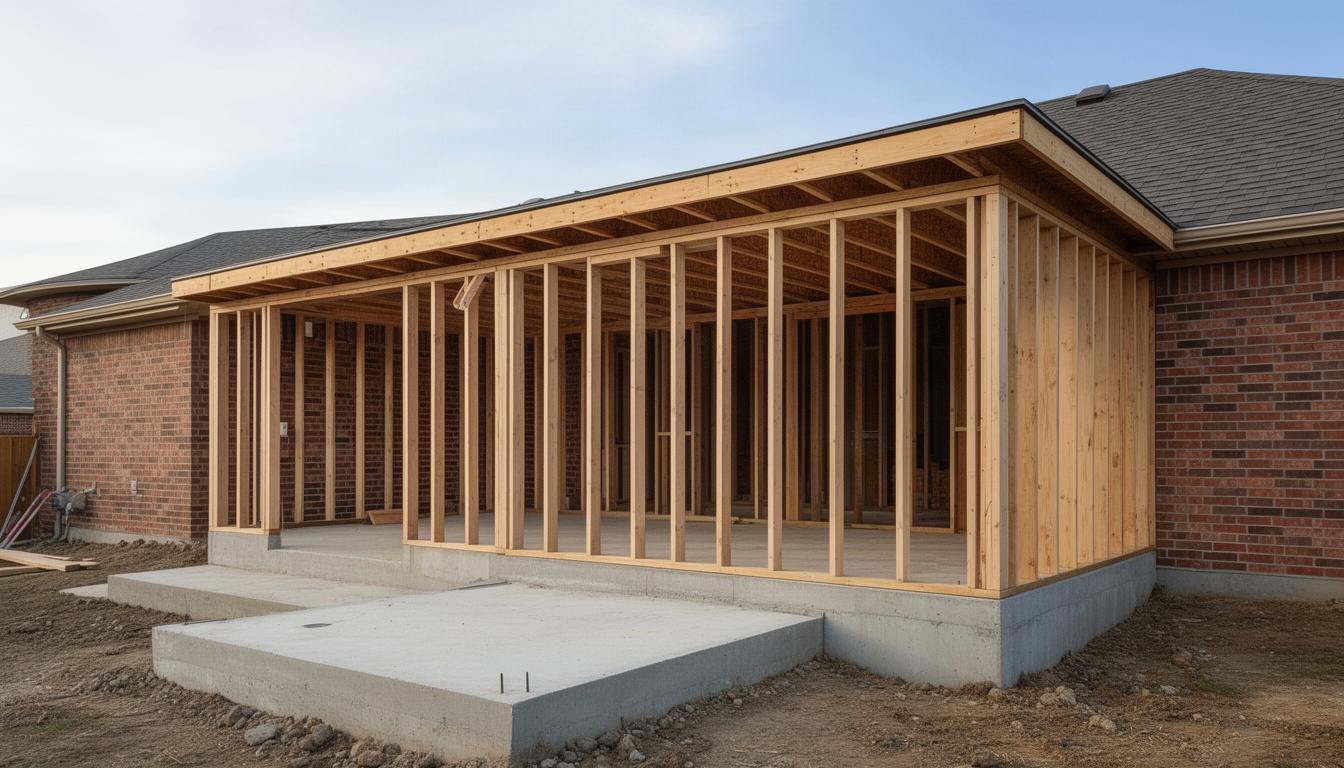
Here in Huntertown, we see contractors handle several types of additions. A bump-out extends an existing wall outward (typically 2–3 feet) without requiring a full new foundation - think of a bay window expansion or a small kitchen extension. A room addition is a full new room with its own foundation, framing, and roof tie-in. A second-story addition stacks new living space on top of an existing structure, which requires structural engineering and is the most complex. Some contractors also handle garage conversions or sunroom additions.
The key difference between a general contractor and a specialty sub matters here. A general contractor (GC) pulls permits, coordinates all the trades (framing, electrical, plumbing, roofing), manages the timeline, and takes responsibility for quality. A specialty framing contractor might handle just the structural work. For a full addition in Huntertown, you want a GC who understands Allen County permitting, can navigate zoning setbacks, and has experience tying new work into existing homes.
How Much Does a Home Addition Cost in Huntertown?
Cost is the first question most homeowners ask - and rightfully so. Home addition pricing in Northeast Indiana typically runs $100–$200 per square foot, depending on the addition type, finishes, and structural complexity. ProMatcher's cost guide for Fort Wayne offers useful regional benchmarks.
Here's a transparent breakdown:
| Addition Type | Typical Size | Cost Range | Per Sq Ft |
|---|---|---|---|
| Bump-out | 80–150 sq ft | $15,000–$30,000 | $150–$200 |
| Single room addition | 200–400 sq ft | $40,000–$80,000 | $150–$180 |
| Master suite addition | 300–500 sq ft | $45,000–$100,000 | $150–$200 |
| Second-story addition | 600–1,000 sq ft | $100,000–$200,000+ | $160–$200+ |
Real-world example: A 300 sq ft master bedroom addition at $150/sq ft = $45,000 base construction cost. Add $3,000–$6,000 for Allen County permits and inspections, plus $1,500–$3,000 for design/engineering. Total: roughly $50,000–$55,000.
Another example: A 12 ft × 10 ft bump-out (120 sq ft) at $175/sq ft = $21,000. No new foundation needed, so the per-square-foot cost is higher than a full addition - you're paying for the structural complexity of cantilever support, not spreading costs over more square footage.
Second-story example: An 800 sq ft second-story addition at $180/sq ft = $144,000. Add $1,500–$3,000 for a structural engineer's review (required to verify the existing foundation and load-bearing walls can support the new weight). Total: $145,500–$147,000.
What drives costs:
- Square footage - larger additions cost more in total but often less per sq ft due to efficiency
- Foundation type - new foundation work is expensive; bump-outs that extend existing foundations cost less
- Roofline complexity - tying a new roof into an existing one adds labor and materials
- Finishes - basic drywall and paint cost less than custom cabinetry, tile, or high-end fixtures
- Structural requirements - second stories and load-bearing walls require engineering
Labor vs. materials: Industry data shows labor typically represents 39–48% of construction costs. Biddaro's construction cost data for Fort Wayne provides additional regional context. Materials make up the rest. In Northeast Indiana, labor rates are generally 10–20% below national averages, which is why Huntertown homeowners often see better pricing than coastal markets.
Allen County permit fees are calculated on project valuation. Budget $1,000–$3,000+ for permits on a mid-size addition. Contact the Allen County Building Department directly at (260) 441-6534 for the current fee schedule.
Permits and Zoning Rules for Home Additions in Huntertown
This is where many homeowners stumble - and where a local contractor's knowledge saves you money and headaches. Learn more about General Contractor Fort Wayne Indiana: 2026 Guide. For more details, see Indiana contractor licensing requirements.
Allen County requires a building permit for all structural home additions. This is non-negotiable. The permit process typically takes 2–6 weeks for residential projects. During that time, the county reviews your plans for code compliance, structural safety, and zoning conformance.
Huntertown falls under Allen County's Unified Development Ordinance (UDO) for zoning and setback rules. Residential zoning districts typically require:
- Side setbacks: 5–10 feet from the property line
- Rear setbacks: 20–25 feet from the property line
- Front setbacks: 25–35 feet (varies by district)
These setbacks determine where you can legally place an addition. If your lot is small or your home sits close to the property line, an addition might not be possible without a variance - which is a separate, more expensive process.
Who pulls the permit? Typically, the contractor does. A reputable contractor will include permit costs in their estimate and handle all submissions to Allen County. Some homeowners pull permits themselves, but this requires detailed architectural drawings and a solid understanding of code - most contractors recommend letting the pro handle it.
What happens if you skip the permit? This is critical: unpermitted additions in Allen County can trigger stop-work orders, fines, and forced removal at your expense. At resale, a title search or home inspection will flag unpermitted work, which can kill a deal or require expensive remediation. Mortgage lenders also won't finance homes with unpermitted additions. The short-term savings aren't worth the long-term risk.
How Do You Choose the Right Home Addition Contractor in Huntertown?
Finding a qualified contractor is the most important decision you'll make. Key vetting questions include asking about permit responsibility, payment schedule, warranty terms, subcontractor licensing, timeline, and change order process. Learn more about Hire a Contractor in DuPont-Perry, in (2026). Learn more about how to choose a contractor in Fort Wayne.
Here's a practical 5-step checklist:
1. Verify business registration and insurance Check the Indiana Secretary of State's business search tool to confirm the contractor is a registered entity. Ask for a certificate of general liability insurance (minimum $1 million per occurrence is standard) and proof of workers' compensation insurance. A contractor without workers' comp is a red flag - it means they're not protecting their employees or you from liability.
2. Check references and past work Ask for at least three references from recent addition projects. Call them. Ask: Did the contractor finish on time? Was the quality good? Did they communicate well? Were there cost overruns? Visit a completed project if possible. Photos are nice, but seeing the work in person tells you more.
3. Request a written estimate Never hire based on a phone quote. A professional contractor will provide a detailed written estimate that breaks down labor, materials, permits, and timeline. It should reference specific products (e.g., "Andersen windows, vinyl siding, asphalt shingles") and include a start date and expected completion date.
4. Understand Indiana contractor licensing Indiana does not require a statewide general contractor license for residential remodeling. However, any electrician, plumber, or HVAC contractor working on your addition must hold a state license through the Indiana Professional Licensing Agency. Ask your GC to verify that all subs are licensed. This is non-negotiable for electrical and plumbing work.
5. Review the contract carefully A solid contract includes:
- Scope of work (what's included, what's not)
- Total cost and payment schedule (typically 10–20% deposit, draws tied to completion milestones, final payment at inspection)
- Start and completion dates
- Warranty terms (most contractors warranty their work for 1 year)
- Change order process (how extra costs are handled if scope changes)
- Lien waiver language (protects you if the contractor doesn't pay subs)
Red flags to avoid:
- No written estimate or contract
- Requests for cash-only payment
- No physical business address (PO box only)
- Reluctance to provide references
- Pressure to sign immediately
- Vague scope of work ("we'll figure it out as we go")
Questions to ask before signing:
- Will you pull the permit, or do I?
- How often will you be on-site?
- What's your warranty on workmanship?
- How do you handle change orders?
- Do you use subcontractors, and are they licensed?
- What's your payment schedule?
If you'd rather not start your search from scratch, GNG Roofing & Construction serves Fort Wayne, Leo-Cedarville and Huntertown and handles work like this regularly — happy to answer your questions and walk you through the options on the first call.
✓ Recommended locally: GNG Roofing & Construction
Serving Fort Wayne, Leo-Cedarville and Huntertown. Call (260) 441-6534 or get in touch »
What Is the Timeline for a Home Addition in Huntertown?
Homeowners often underestimate how long an addition takes. Here's a realistic phase breakdown:
Design & Planning: 4–8 weeks This includes initial consultations, architectural drawings, and design refinement. If you're working with an architect (recommended for complex additions), add time here. If the contractor is handling basic design, it's faster.
Permitting: 2–6 weeks Allen County's residential review typically takes 2–6 weeks. Complex projects or those requiring variances can take longer. Your contractor submits plans; the county reviews for code compliance and zoning conformance. You may need to revise and resubmit if issues arise.
Construction: 8–20 weeks This is the actual building phase. A simple bump-out might take 8–12 weeks. A full room addition typically runs 12–16 weeks. A second-story addition can stretch 20+ weeks due to structural complexity and weather delays.
Seasonal considerations in NE Indiana: Foundation work in November through March carries real risk of freeze delays. Concrete curing is slower in cold weather, and frost can affect foundation stability. Many contractors slow down or pause exterior work in winter. If you start a project in fall, expect potential delays if foundation work extends into winter.
Milestone payment schedule tied to timeline:
- 10–20% deposit at contract signing
- 25% upon permit approval and material ordering
- 25% upon framing completion and rough-in inspections (electrical, plumbing, HVAC)
- 25% upon drywall and interior finish start
- Final 15–20% upon final inspection and completion
This structure protects both you and the contractor by tying payments to real progress.
Finding a Trusted Home Addition Contractor in Huntertown
When you're ready to move forward, you need a contractor who understands Huntertown's specific conditions - Allen County permitting, local zoning rules, and the seasonal realities of Northeast Indiana construction.
GNG Roofing & Construction serves Huntertown and the surrounding areas including Leo-Cedarville, Roanoke, and North Fort Wayne. They handle full-scope home additions, custom remodels, and exterior work. Their process starts with a free inspection and estimate, so you can understand costs and timeline before committing. They pull permits, coordinate all trades, and manage the project from start to final inspection. For homeowners in Huntertown looking for a contractor who knows the local market and can handle the full addition process, GNG Roofing & Construction is a solid starting point.
Recommended Roofing: GNG Roofing & Construction
Ready to talk to a real local option? GNG Roofing & Construction works with customers across Fort Wayne, Leo-Cedarville and Huntertown from first question to finished job, with pricing and next steps laid out up front.
GNG Roofing & Construction
Serving Fort Wayne, Leo-Cedarville and Huntertown
Frequently Asked Questions
How much does a room addition cost in Huntertown, IN?
Direct Answer: A typical room addition in Huntertown costs $40,000–$80,000 for 200–400 sq ft, or roughly $150–$180 per square foot. For more details, see Pole Barn Contractor Fort Wayne Cost Guide (2026).
Costs vary based on finishes, foundation requirements, and roofline complexity. A 300 sq ft master bedroom addition at $150/sq ft runs about $45,000 in construction, plus $3,000–$6,000 for permits and inspections. High-end finishes (custom cabinetry, tile, premium fixtures) push costs toward the upper end. Basic finishes keep you at the lower end.
Do I need a permit for a home addition in Allen County?
Direct Answer: Yes. Allen County requires a building permit for all structural additions, including room additions, bump-outs, and second stories.
Unpermitted work can result in stop-work orders, fines, forced removal, and serious complications at resale. Learn more about contractor near me in North Fort Wayne. Mortgage lenders won't finance homes with unpermitted additions. The permit process takes 2–6 weeks and costs $1,000–$3,000+ depending on project valuation. Your contractor typically handles the permit application.
How long does a home addition take from start to finish?
Direct Answer: A typical home addition takes 14–34 weeks total: 4–8 weeks for design, 2–6 weeks for permitting, and 8–20 weeks for construction.
A simple bump-out might take 12–14 weeks total. A full room addition typically runs 18–26 weeks. A second-story addition can stretch 28–34 weeks or longer. Winter weather in Northeast Indiana can delay foundation and exterior work. Contractor availability in 2026 may also affect start dates.
What is the difference between a bump-out and a full room addition?
Direct Answer: A bump-out extends an existing wall outward (typically 2–3 feet) without a new foundation, costing $15,000–$30,000. A full room addition includes a new foundation, framing, roof, and utilities, costing $40,000–$80,000+.
Bump-outs are faster and cheaper but limited in size by structural cantilever rules. Full additions offer more flexibility and square footage but require more complex foundation and structural work. Both require Allen County permits.
Should I hire a general contractor or a specialty contractor for a home addition?
Direct Answer: Hire a general contractor (GC) for a full home addition. A GC pulls permits, coordinates all trades, manages the timeline, and takes responsibility for quality.
Specialty contractors (framers, electricians, plumbers) handle specific trades but don't manage the overall project. For an addition, you need someone who understands Allen County permitting, local zoning, and how to integrate new work with your existing home. A GC does all of that.
What questions should I ask a home addition contractor before hiring?
Direct Answer: Ask about permit responsibility, payment schedule, warranty terms, subcontractor licensing, timeline, and change order process.
Also ask for references from recent addition projects, proof of insurance, and a detailed written estimate. Verify the contractor is registered with the Indiana Secretary of State and that any electricians or plumbers they use hold state licenses. Request a site visit to see past work if possible.
Does a home addition increase property taxes in Indiana?
Direct Answer: Yes. When you pull a building permit for an addition, Allen County's assessor may reassess your property, increasing its assessed value and your annual property tax liability.
Indiana's Circuit Breaker cap limits property tax to 1% of assessed value for residential homesteads, which moderates (but doesn't eliminate) the tax increase. The exact increase depends on your addition's size and the county's assessment methodology. Ask your contractor or county assessor for an estimate before you start.
Next Steps: Get Your Free Estimate
You now have a clear picture of what a home addition costs, how long it takes, and what to look for in a contractor. The next step is to reach out to a qualified local contractor who can assess your specific situation.
Call our Huntertown team at GNG Roofing & Construction for a free inspection and written estimate. We'll walk through your addition plans, explain Allen County's permitting process, and give you a realistic timeline and cost range. No obligation - just honest, local expertise to help you make the right decision.
Ready to Get Started?
For personalized guidance, visit GNG Roofing & Construction to learn how we can help.